Thai Food Decoded: Curries, Noodles, and the 4 Flavors on Every Plate
Every great Thai dish balances sweet, sour, salty and spicy at once — once you can taste that, the whole menu opens up and ordering gets easy.

Ask a Thai cook the secret and you won’t hear about a single ingredient — you’ll hear about balance. A well-made Thai dish holds several flavors in tension at the same moment: sweet, sour, salty and spicy, usually with a deep savory umami underneath. That is the whole game. Once you can taste those four notes pulling against each other in a single bite, a Thai menu stops looking like a wall of unfamiliar names and starts reading like a set of dials you can adjust to your own taste.
The four flavors (plus one) on every plate
Thai seasoning is built from a small, powerful pantry, and each element does a specific job:
- Sweet — palm sugar, and the natural sweetness of coconut milk.
- Sour — fresh lime juice and tamarind.
- Salty — fish sauce (nam pla) above all, plus shrimp paste and soy.
- Spicy — fresh and dried chilies, worked in at every heat level.
- Umami / aromatic — the backbone: garlic, galangal, lemongrass, makrut lime leaf, cilantro root and shallots.
A cook tastes and re-tastes, nudging one dial up and another down until the dish snaps into focus. When a Thai plate tastes flat, it’s almost never “not enough of one thing” — it’s one flavor drowning the rest.
Beginner tip: taste before you reach for the condiment caddy. Most Thai tables carry four seasonings — fish sauce, sugar, chili flakes and chili-vinegar — precisely so you can fine-tune the balance to your own palate. That is not a garnish; it’s an invitation.
Curries: it’s the paste, not the color
Thai curries start from a hand-pounded curry paste — chilies, aromatics and spices — bloomed in coconut cream, then loosened with coconut milk and stock. The name usually tells you the paste, not the heat:
The ones you’ll see most
- Green curry (gaeng keow wan) — made with fresh green chilies; bright, herbal and often the spiciest of the coconut curries, despite the mellow color.
- Red curry (gaeng phet) — dried red chilies give it a rounder, warmer heat; a reliable middle ground.
- Yellow curry (gaeng kari) — turmeric and warm spices, mild and a little sweet; very approachable.
- Massaman — a Muslim-influenced curry with cardamom, cinnamon, cloves and peanuts; rich, gently sweet and barely spicy. The easiest first curry.
- Panang — thicker and drier than red curry, nutty with peanut, fragrant with makrut lime.
If you’re heat-shy, start with massaman or yellow and work toward green. And remember you can almost always ask for the spice dialed to your level.
Noodles: three plates worth knowing
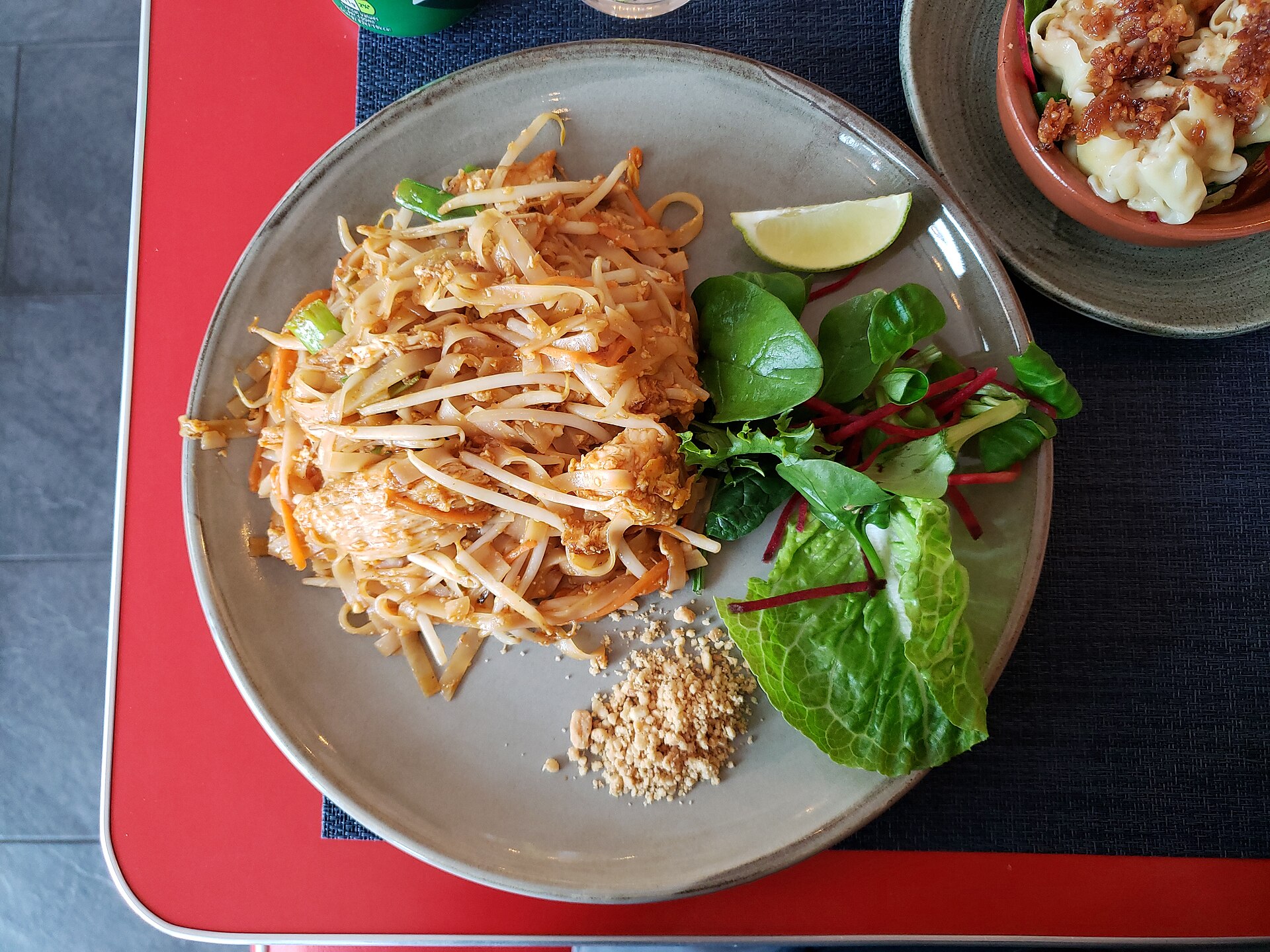
- Pad thai — thin rice noodles stir-fried with tamarind, fish sauce and palm sugar, tossed with egg, tofu or shrimp, bean sprouts and crushed peanuts, with lime on the side. The famous one — and a perfect study in sweet-sour-salty balance.
- Pad see ew — wide rice noodles seared in the wok with dark soy, egg and Chinese broccoli. Smoky, savory and barely spicy — the comfort pick.
- Pad kee mao (“drunken noodles”) — wide noodles fired hot with chili, garlic, holy basil and often plenty of heat. No alcohol involved; the name nods to how well it goes with a cold drink.
Two more to know: khao soi, a northern coconut-curry noodle soup topped with crisp noodles, and boat noodles, a dark, deeply savory beef noodle soup.
Thailand on a map: the regions
Central
The Bangkok table most Americans know: coconut curries, pad thai, tom yum and tom kha soups — balanced, often a touch sweet.
Isan (Northeast)
Bold, punchy and funky, leaning sour and spicy: som tam (green papaya salad), larb (minced-meat salad with toasted rice powder), grilled meats and sticky rice eaten by hand. Some of the most exciting eating on any Thai menu.
Northern
Milder and more herbal, with less coconut: khao soi, sai ua (herby grilled sausage) and nam prik chili dips with vegetables.
Southern
The spiciest region, shaped by the sea and by Malay influence: intense curries, turmeric-fried fish and searing chili heat. Order with respect.
What a beginner should actually order
- To start: fresh spring rolls, satay with peanut sauce, or tom kha gai (mild coconut-galangal chicken soup).
- A curry: massaman or panang with rice.
- A noodle: pad see ew (mild) or pad thai (balanced).
- One adventurous plate: som tam or a basil stir-fry (pad kra pao) with a fried egg on rice — arguably Thailand’s true national dish.
Vegetarians eat well too: most stir-fries and curries can be made with tofu and vegetables — just ask them to hold the fish sauce and use soy instead.
Order Thai direct — and skip the fees
Many of the Thai kitchens in our directory let you order online directly, with no third-party commission — which keeps more money with the cooks doing the balancing. Browse the JinsCafe directory to find one near you, read real diner reviews first, and if you’re exploring Southeast Asia further, try our Vietnamese food guide or the deep dive on umami, the savory note under every great Thai plate.