What Is Dim Sum? A Complete Beginner’s Guide to Cantonese Small Plates
Steamed dumplings, barbecue pork buns, rice noodle rolls and endless tea — here is how dim sum works and exactly what to order on your first visit.

Dim sum (点心, dim sam in Cantonese) is not a single dish — it is a style of eating: dozens of small plates of dumplings, buns, rolls and sweets, shared around a table and washed down with pot after pot of tea. The tradition grew out of the teahouses along the old Silk Road and matured in the Cantonese south, in Guangzhou and Hong Kong, where “yum cha” (饮茶, literally “drink tea”) became a weekend ritual for whole families.
How a dim sum meal actually works
Classically, servers push steam carts between the tables and you point at what looks good; steamer baskets and small plates are stacked as they arrive. Many modern restaurants have switched to a paper order sheet — you tick boxes and the kitchen fires everything fresh. Either way, the rhythm is the same: order a few items at a time, keep the tea coming, and pace yourself — the bill is tallied by counting the empty plates and baskets, each priced by size (small, medium, large, special).
Two small pieces of etiquette that mark you as a regular: when someone refills your tea, tap two fingers on the table to say thank you without interrupting the conversation; and when the pot runs dry, rest the lid ajar on top to signal for a refill.
The dishes to order first
Steamed classics
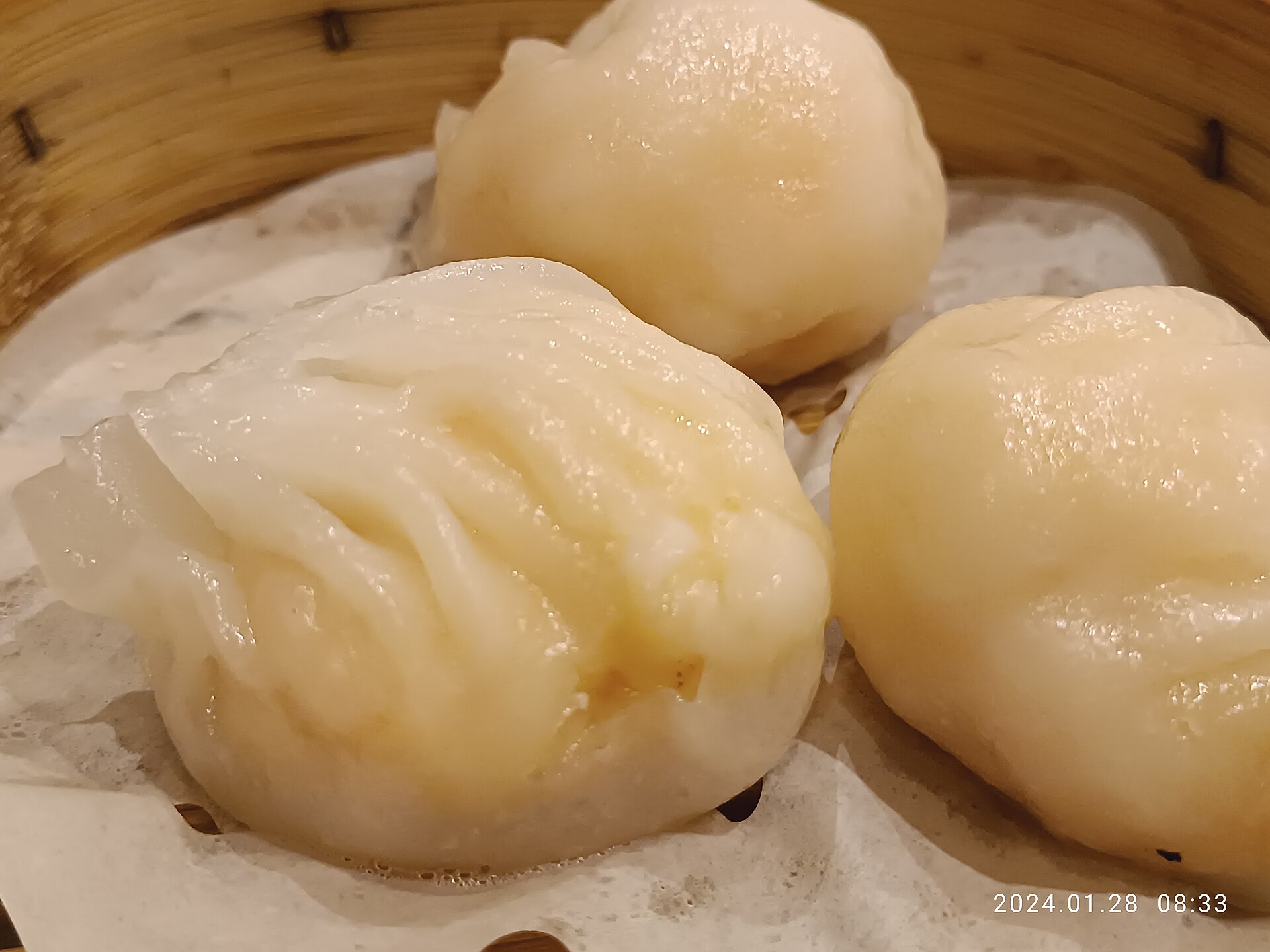
- Har gow (虾饺) — crescent shrimp dumplings in a translucent, pleated wheat-starch wrapper. The benchmark of any dim sum kitchen; a good one has at least seven pleats and snaps cleanly.
- Siu mai (烧卖) — open-topped pork-and-shrimp dumplings, usually crowned with a dot of crab roe. The everyday companion to har gow.
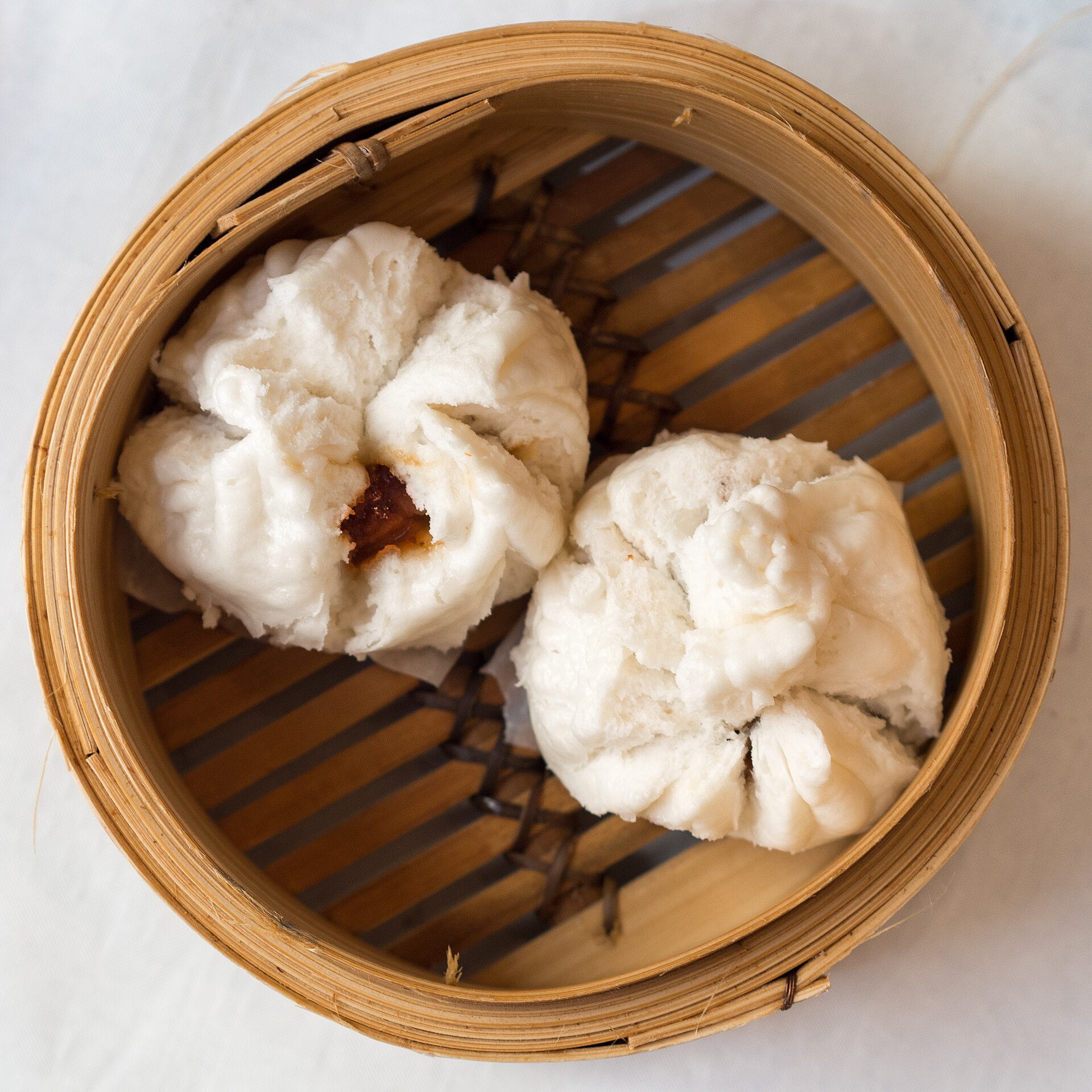
- Char siu bao (叉烧包) — fluffy steamed buns stuffed with sweet barbecue pork. There is also a modern baked version with a crackly golden top.
- Cheung fun (肠粉) — silky rice-noodle rolls wrapped around shrimp, beef or fried dough, finished with a sweet soy sauce.
Fried & pan-crisped
- Spring rolls (春卷) and taro croquettes (芋角) — the crunchy corner of the table.
- Turnip cake (萝卜糕) — pan-fried radish cake studded with cured pork and dried shrimp.
- Lo mai gai (糯米鸡) — sticky rice with chicken, steamed in a lotus leaf that perfumes the whole parcel.
Save room for sweets
- Egg tarts (蛋挞) — warm custard in flaky pastry, the classic finish.
- Mango pudding and tofu pudding (豆腐花) — light, cool, and not too sweet.
New to it? A solid first order for two people: har gow, siu mai, char siu bao, a cheung fun, a turnip cake, and two egg tarts. That is a complete tour without over-ordering.
Is dim sum spicy? Vegetarian friendly?
Traditional Cantonese dim sum is rarely spicy — the seasoning is gentle, and chili oil is offered on the side. Vegetarians can eat well too: look for steamed vegetable dumplings, tofu-skin rolls, stir-fried greens (like snow pea shoots), turnip cake made without pork, and the sweets. Always confirm fillings, since shrimp and pork appear in unexpected places.
Find dim sum near you
Many of the Cantonese and Hong Kong-style restaurants in our directory serve dim sum and let you order online with no third-party fees. Browse the JinsCafe restaurant directory to find one near you, and see real diner reviews and ratings before you go. If you want to go deeper into Chinese food beyond the Cantonese table, read our guide to the regional cuisines of China.