The Chopstick Mistakes That Quietly Offend (and How to Fix Them)
Some chopstick habits look harmless but carry real weight at the table — a few even echo funeral rites. Here’s what to avoid, what to do instead, and how it shifts across China, Japan and Korea.

Most people worry about looking clumsy with chopsticks. The bigger risk is a habit that looks perfectly natural to you but lands as rude — or even unlucky — to the table around you. A couple of the most common ones aren’t about manners at all; they quietly echo funeral customs. The good news: there are only a handful to know, the fixes are easy, and getting them right marks you as a thoughtful guest anywhere in East Asia.
The taboos worth knowing
Don’t stand chopsticks upright in rice
This is the big one. Sticking your chopsticks vertically into a bowl of rice mimics incense sticks at a funeral and bowls of rice offered to the dead. It reads as an omen of death across China, Japan and Korea. The fix: lay them flat across the rim of the bowl or on a chopstick rest whenever you set them down.
Don’t pass food chopstick-to-chopstick
Handing a piece of food directly from your chopsticks to someone else’s mirrors a Japanese funeral rite in which cremated bones are passed between relatives with chopsticks. It unsettles people even when they can’t name why. The fix: place the food on the person’s plate, or offer it on a small serving dish.
Don’t spear your food
Stabbing a piece of food to pick it up because it’s slippery signals impatience and poor skill — and in Japan it carries a whiff of the same funeral association. The fix: take smaller bites, or cut soft food against the plate with the sides of your chopsticks. Persistence beats the skewer.
Don’t point, wave, or dig
- Pointing at people with your chopsticks is like pointing with a finger, only sharper. Set them down before you gesture.
- Waving them over dishes while you decide (“hovering,” mayoi-bashi in Japan) reads as greedy and indecisive.
- Digging through a shared dish for the best piece (sagashi-bashi) is poor form — take the piece nearest you.
- Drumming, licking, or sucking the ends is childlike and unclean.
One rule covers most of these: when chopsticks aren’t in your hand, they’re at rest — laid down neatly. Chopsticks in motion should be traveling straight from a dish to your mouth, nowhere else. Get that reflex and the taboos take care of themselves.
Doing it right: holding, resting, and serving
The grip
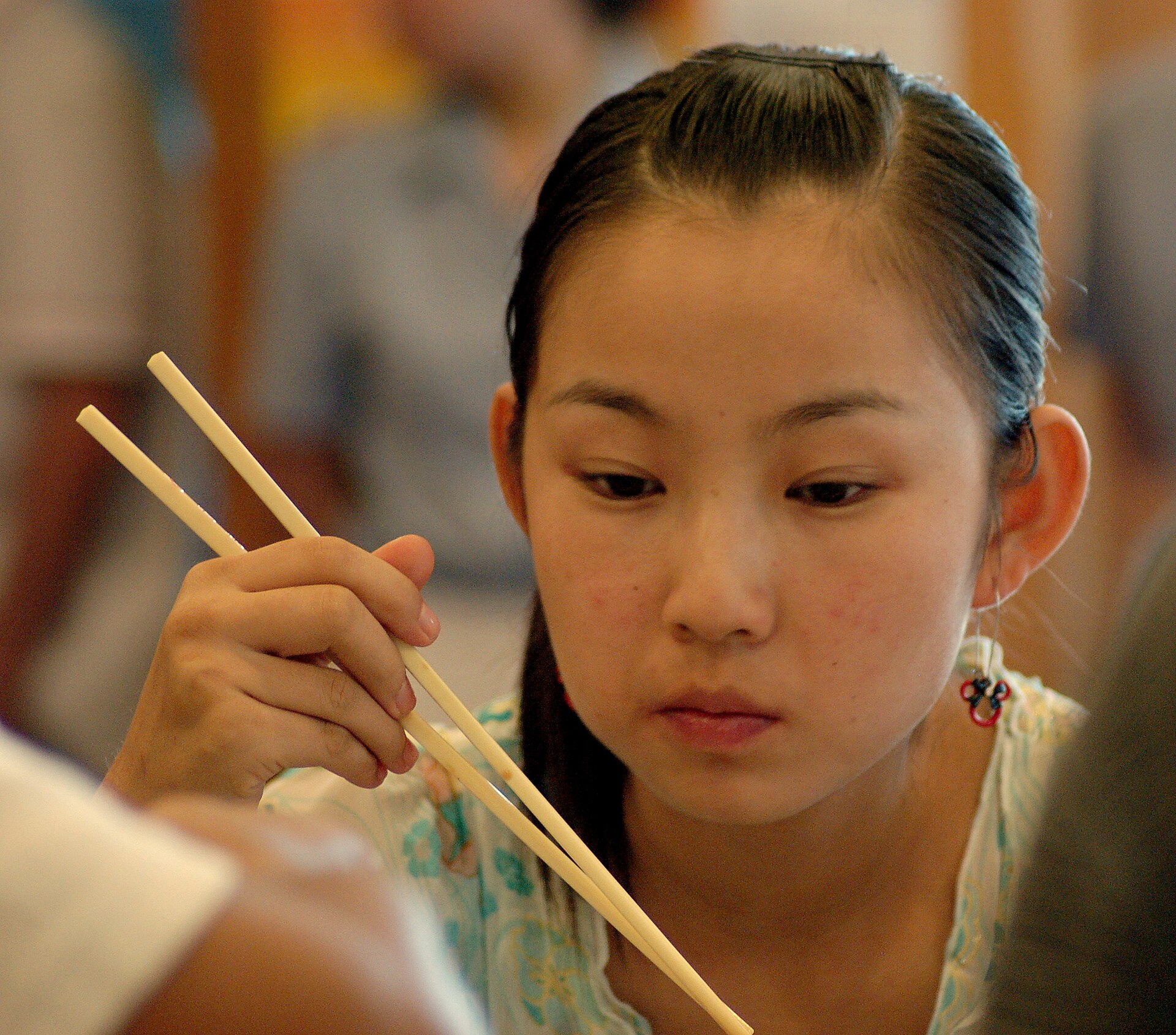
Rest the lower stick in the crook of your thumb and against your ring finger — it stays still. Hold the upper stick like a pencil, moving it with your index and middle fingers to pinch. The bottom stays put; only the top moves. It feels awkward at first and then it doesn’t.
Resting them
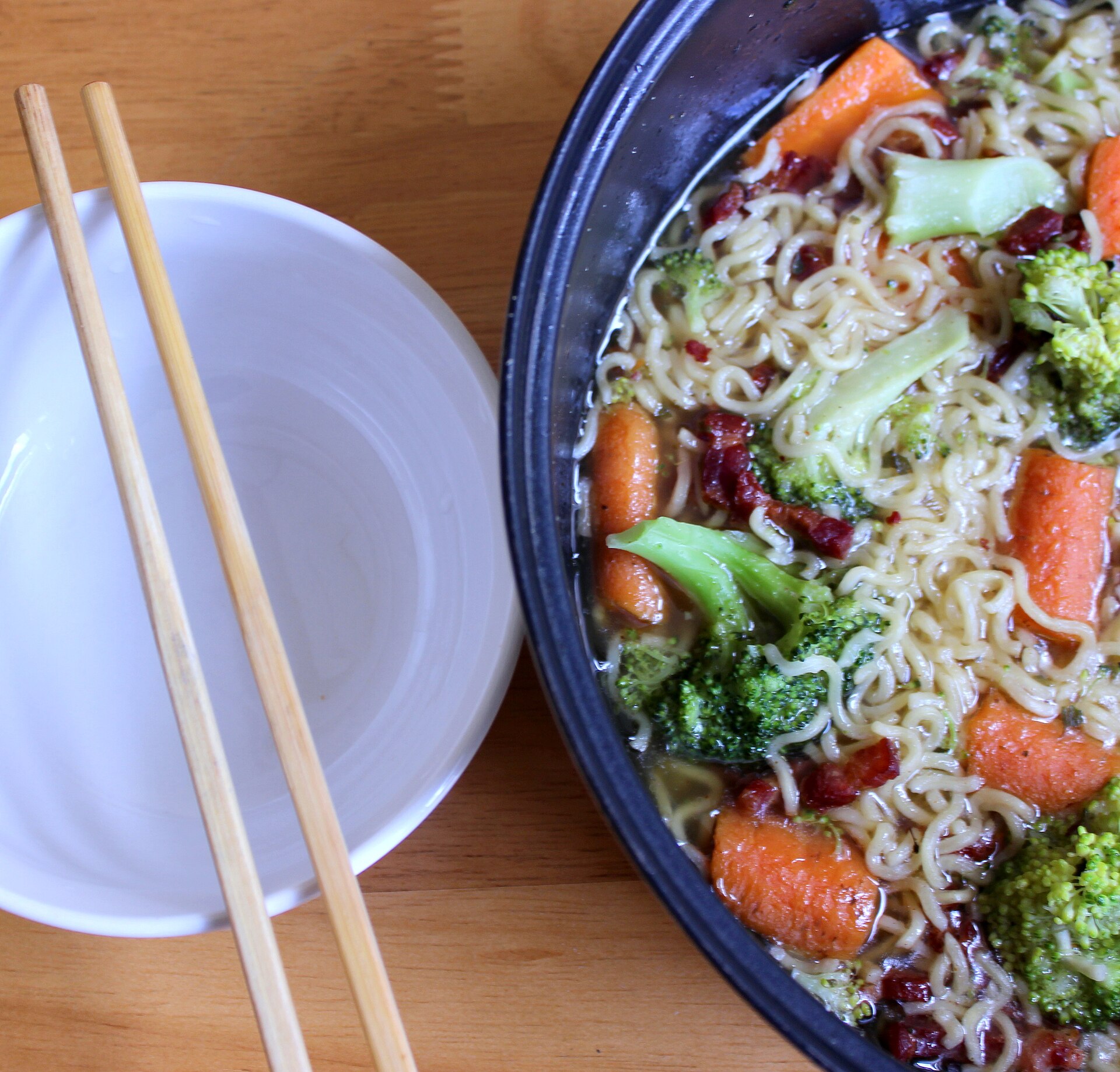
Use the chopstick rest (hashioki) if there is one, tips pointing left. No rest? Lay them across the top edge of your plate or bowl, or across a soy-sauce dish — neatly parallel, never crossed, never plunged into food.
Serving from shared plates
Ideally use the serving chopsticks or spoon provided. If there are none, the polite move in more formal settings is to flip your own chopsticks and use the clean back ends to move food to your plate. Take from the side of the communal dish closest to you, not from the middle or the far side. For the bigger picture of sharing food across cultures, see our guide to table manners across Asia.
How it differs: China, Japan, Korea
China
Chopsticks are the primary utensil for nearly everything, rice bowl included — it’s normal and correct to lift the bowl close to your mouth and push the rice in. Longer chopsticks are common because meals are shared family-style from the center of the table. Resting them across the bowl is fine; standing them upright is the cardinal sin.
Japan
The etiquette is the most codified, with named faux pas for nearly every misuse (the -bashi terms above). Chopsticks are often shorter and tapered to a fine point for fish and small morsels, and a hashioki rest is standard. You lift small bowls; you don’t pass food stick-to-stick.
Korea
Korea is the outlier, and the detail people miss most. Koreans use flat metal chopsticks paired with a spoon (sujeo), and there’s a clear division of labor: the spoon is for rice and soup, the chopsticks are for side dishes and everything else. Notably, you do not lift your rice bowl off the table — it stays down and you eat from it with the spoon, the opposite of the Chinese habit. The metal is slipperier and takes a little practice; locals grow up with it.
Put it to use near you
The fastest way to get comfortable is simply to eat — a bowl of noodles, a plate of dumplings, a Korean spread with its spoon-and-chopstick set. Browse the JinsCafe directory to find Chinese, Japanese and Korean restaurants that let you order direct with no third-party fees, check the reviews, and go practice. New to eating at a sushi counter? Pair this with our omakase guide before your first visit.