Soup Dumplings (Xiao Long Bao): How the Soup Gets Inside
Bite into one and hot broth floods out — but no one poured it in. The secret is a trick of temperature, and once you know it, you’ll never wonder again.

Here is the question everyone asks the first time: you bite into a xiao long bao and a mouthful of hot, savory broth spills out — but the dumpling was clearly sealed shut before it was steamed. Nobody injected the soup. So how did the liquid get inside a dumpling that was folded around solid filling? The answer is one of the most elegant tricks in all of Chinese cooking, and it is simpler than you think.
The secret: the soup starts out solid
The trick is aspic — a rich broth set into a firm, jiggly gel. Here is how it works:
- A cook simmers pork skin, bones, and sometimes a whole chicken for hours, producing a stock loaded with natural gelatin.
- That stock is chilled until it sets into a solid, wobbling jelly — like a savory version of Jell-O.
- The jelly is diced into small cubes and mixed into the raw ground-pork filling.
- The wrapper is folded around this cool, semi-solid mix and pleated shut — no liquid to leak, because at this stage there is no liquid.
- Then comes the magic: in the steamer’s heat, the gelatin melts back into hot soup, filling the dumpling from within.
So the soup was never poured in. It was folded in as a solid and it liquefied in the steam. That is the whole secret — a bit of kitchen physics that has delighted eaters for well over a century.
The name is often misread. Xiao long bao (小笼包) means “small basket bun” — long refers to the little bamboo steamer basket they cook in, not to a dragon. It is a bun steamed in a small basket, nothing more mysterious than that.
Where they come from
Xiao long bao — often shortened to XLB — are a specialty of the Jiangnan region around Shanghai. They are traditionally traced to Nanxiang, a town on the outskirts of Shanghai, in the 1870s, where a shopkeeper is credited with refining the thin-skinned, soup-filled style. From there they spread through Shanghai’s teahouses and, eventually, around the world. A truly great XLB is judged on the delicacy of its skin, the richness of its soup, and the balance of its filling all at once.
What about the pleats?
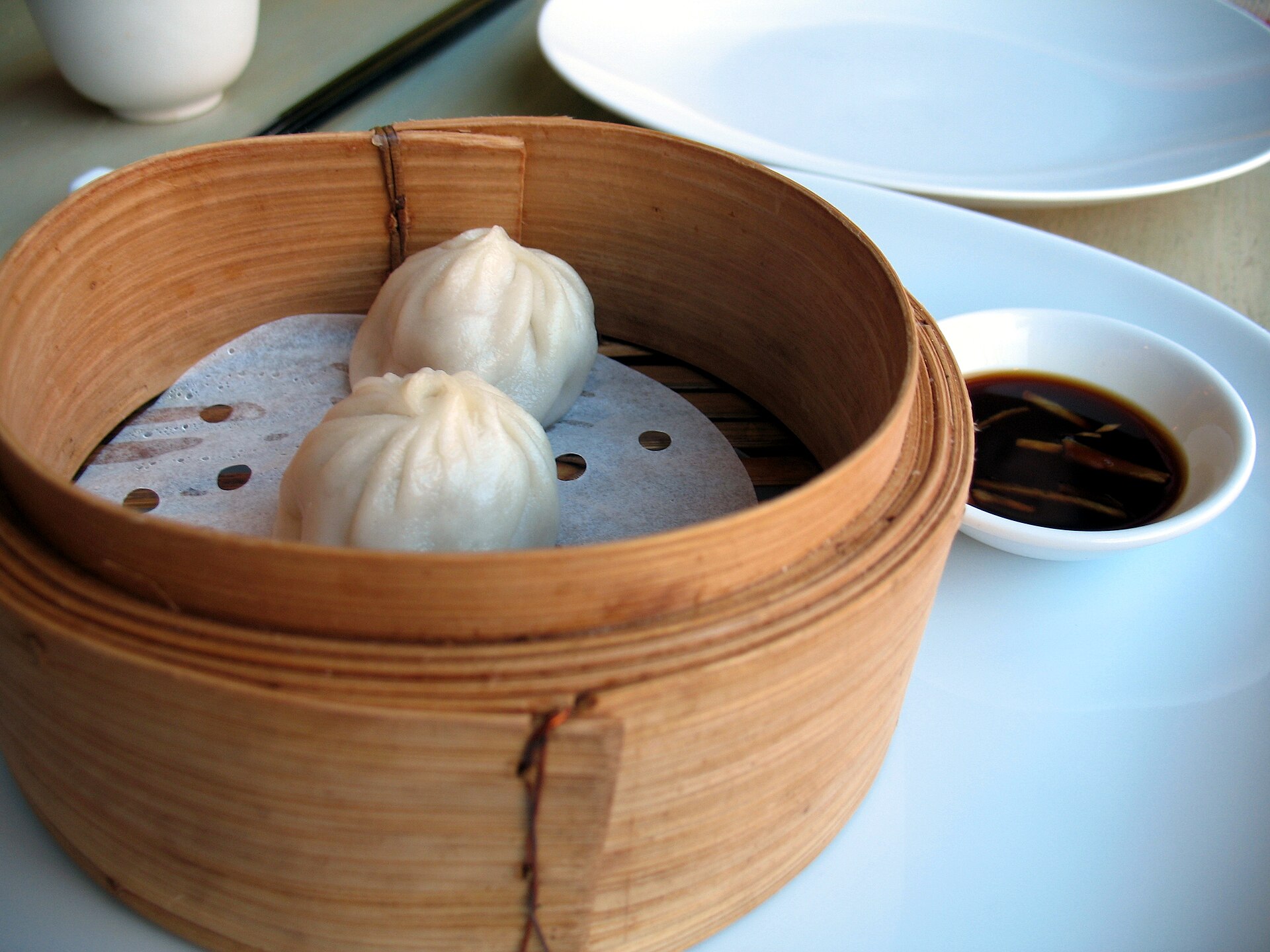
Look closely at the top of a well-made XLB and you will see a neat spiral of tiny pleats gathered into a topknot. Skilled dumpling makers aim for a high pleat count — many kitchens hold up 18 pleats as the traditional benchmark for a single dumpling, though the exact number matters less than what it signals: a thin, even, carefully sealed wrapper that won’t burst in the steamer. The little twist of dough at the top should be tender, not a thick doughy knot.
How to eat one without burning yourself
This matters more than it sounds — that soup comes out of the steamer hot enough to scald. Here is the method regulars use:
- Prepare your dip. Fill a small dish with black vinegar (Zhenjiang vinegar) and a few fine slivers of fresh ginger. The bright acidity is the classic partner to the rich pork.
- Lift gently. Use your chopsticks to grip the topknot — the thick pleated top — and lift the dumpling without piercing the delicate bottom, which is heavy with soup.
- Rest it on your spoon. Set the dumpling onto a Chinese soup spoon rather than straight into your mouth.
- Vent the steam. Nibble a small hole in the side and let the broth pool into the spoon for a few seconds — this cools it just enough to be safe.
- Sip, then eat. Sip the soup from the spoon, add a little ginger and vinegar, then eat the dumpling and filling together.
Rush this and you will burn the roof of your mouth — a rite of passage almost every XLB lover has suffered exactly once.
XLB vs. soup buns vs. sheng jian
Not every soup-filled bun is a xiao long bao. A few relatives worth knowing:
- Xiao long bao (XLB) — thin, translucent, delicately pleated wrapper; steamed; a single mouthful of filling and soup. The refined benchmark.
- Tang bao (汤包) — literally “soup bun,” a larger, soup-heavy version, sometimes so big it is served with a straw to sip the broth first. More soup, less filling.
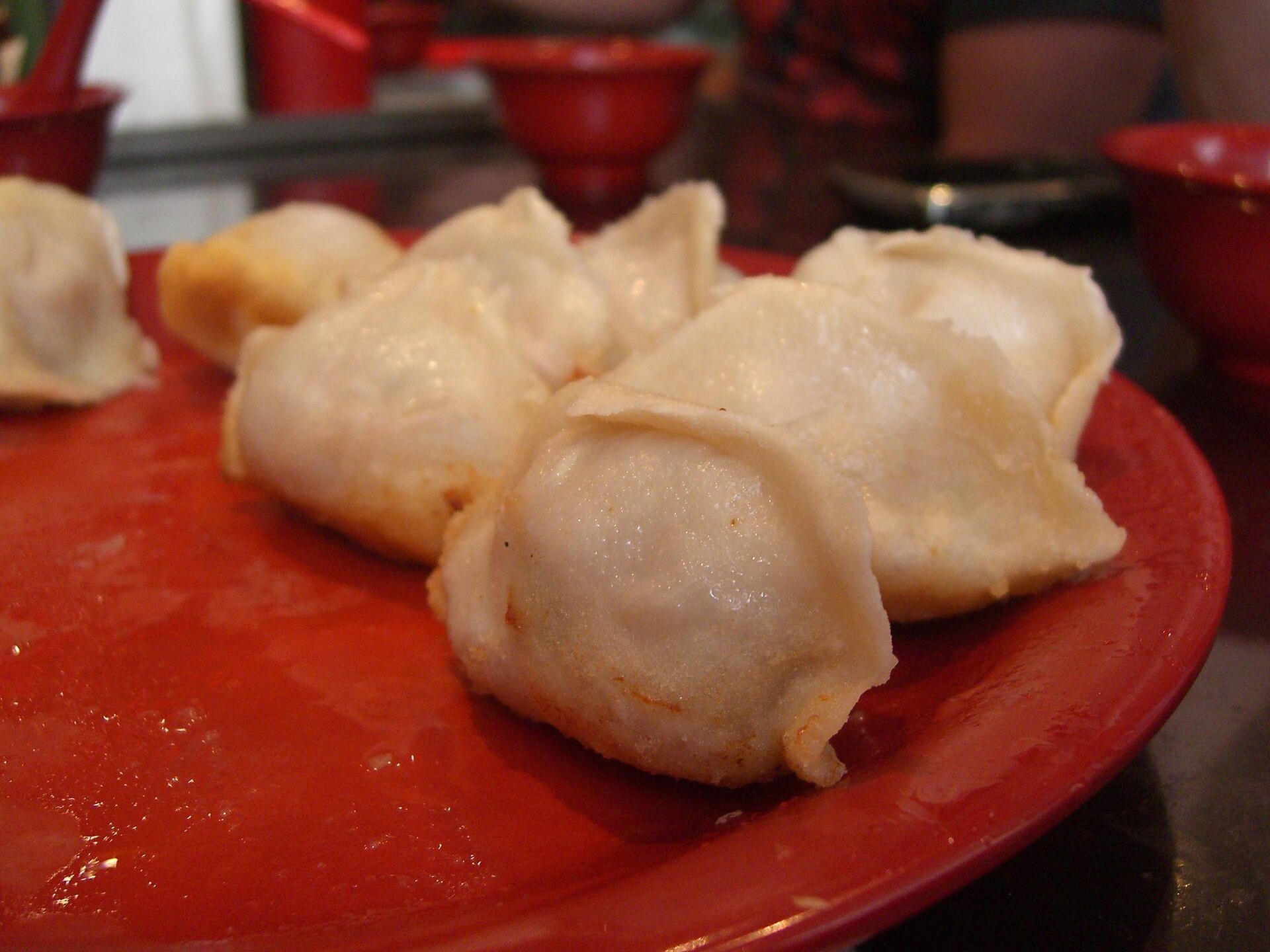
- Sheng jian bao (生煎包) — a thicker, yeasted bun that is pan-fried, giving a crisp golden bottom and a fluffy top, with a smaller pocket of soup inside. A Shanghai breakfast icon with a completely different texture.
Knowing the difference is the mark of someone who has eaten their way around a Shanghai dumpling menu.
A dumpling worth seeking out
Xiao long bao reward a little care — both from the kitchen that folds them and the diner who eats them. For more on the wider world of Chinese small plates and dumplings, see our guide to Cantonese dim sum, a different but related tradition of steamed baskets.
Find soup dumplings near you — and order direct
Many Shanghainese and Jiangnan-style restaurants in our directory make xiao long bao fresh and let you order online directly, with no third-party delivery fees. Browse the JinsCafe restaurant directory to find one near you, and read real diner reviews and ratings before you go — freshly folded soup dumplings are worth choosing carefully for.